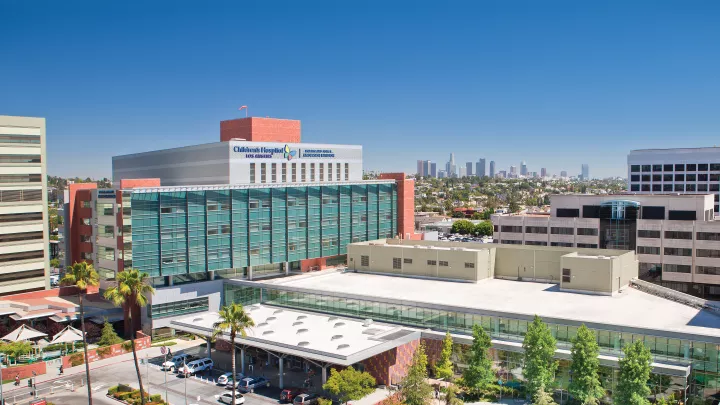
The HOPE Health Outcomes and Cancer Control Research Program is dedicated to the scientific exploration of survivorship, psychosocial coping and adjustment, and improving health outcomes for young people with cancer and blood diseases treated at the Childrens Center for Cancer and Blood Diseases.
Research is a key component of all HOPE programs with investigators conducting research in the areas of survivorship, cancer control, communication, neuropsychology, behavioral science and psychosocial adjustment and cancer epidemiology. The long-term goal of all HOPE research projects is to improve the quality of care and enhance long-term survival of children/adolescents diagnosed with cancer. Following is a current listing and brief description of our research projects. If you would like more information about our research program or the studies below, contact Dr. Meeske (Kmeeske@chla.usc.edu, 323-361-2489).
I. SurvivorshipPsychosocial Outcomes among Adolescent Cancer Survivors: A Longitudinal Study The purpose of this study is to evaluate psychosocial outcomes among adolescent/young adult cancer survivors and to track changes that occur during the first five years off treatment. Participants in this study complete a survey within nine months of completing treatment and at two and five years post-treatment. Assessments focus on posttraumatic stress, posttraumatic growth, fatigue, depression, information needs, use of services and quality of life. This is a multi-institutional study supported by AFLAC. Impact of Cancer on Young Adults The objectives of this study are to assess the impact of cancer, track psychosocial service use over time, identify socio-demographic, psychosocial, health status, genetic predisposition and/or medical treatment variables that may be associated with service use and to examine the extent to which service use promotes positive outcomes and/or prevents negative outcomes. This is a multi-institutional study supported by HopeLab. The Childhood Cancer Survivor Study The Childhood Cancer Survivor Study (CCSS) is a multi-institutional collaborative project initiated in 1994 to investigate the effects of cancer treatment among the expanding population of long-term survivors of childhood cancer. This study will include approximately 28,000 five-year survivors of childhood cancer diagnosed at 26 cancer centers in the United States and Canada between 1970-1999 and a sample of 5,000 sibling controls. Approximately 1,700 patients from CHLA will be enrolled in this study that is supported by the National Institute of Health. Adverse Events after Childhood Cancer: A Children’s Oncology Group Study With longer follow-up, it has become apparent that pediatric cancer survivors are at risk of treatment-related complications that develop many years after treatment. The purpose of this study to identify potential genetic risk factors which may be associated with the development of significant adverse events in long-term survivors of childhood cancer, such as cardiac dysfunction, stroke, avascular necrosis and second cancers. This research is funded by the Children’s Oncology Group and the Lance Armstrong Foundation. Premature Carotid Artery Disease in Childhood Cancer Survivors Treated with Neck Irradiation While recent studies suggest that radiation therapy to the neck is a significant risk factor for carotid artery disease, this potential late effect is poorly understood in childhood cancer survivors. The purpose of this study is to obtain preliminary data on prevalence of and risk factors associated with carotid artery disease in survivors of childhood cancer following radiation therapy to the neck. The study is funded by the National Cancer Institute and the General Clinical Research Center (GCRG) at our hospital. Psychosocial Adjustment among Adult Survivors of Adolescent Cancer During the last three decades, significant progress has been made in treating childhood and adolescent cancers. Inspired by improved survival rates, research has begun to explore the psychological sequelae of childhood and adolescent cancer survivors. However, much of this research has focused on survivors of childhood cancers, leaving less known about survivors of adolescent cancers. The purpose of this study is to address gaps in the literature on psychological adjustment in adult survivors of adolescent cancer. The aims of this study are to (1) describe the health knowledge and behaviors, particularly how adult survivors perceive their current health and future health, (2) describe survivors’ current psychosocial functioning, including symptoms of depression, anxiety, cancer-specific stress (hypervigilance, avoidance, intrusive thoughts), sense of optimism and personal growth and (3) describe how cancer survivors perceive common lifestyle choices faced during young adulthood, such as obtaining education, employment, partner and family. Mobile Social Networking For Childhood Cancer Survivors Young adult survivors of pediatric cancer face significant lifetime medical risks related to their illness and their treatment regimens. These survivors need to engage in lifelong health surveillance and health promoting behaviors for risk reduction. The purpose of this study is to determine if mobile social networking technology can be a valuable tool for disseminating information to childhood cancer survivors, increasing well-being, expanding their social networks. The specific aims are to:
A Research Database for Survivors of Childhood Cancer There has been marked improvement in survival following childhood cancer, with 5-year survival rates now approaching 80%. However, the use of cancer therapy at an early age can result in complications that may not be apparent until years later. This study provides a mechanism that allows investigators to use clinical data collected from cancer survivors at our hospital for research purposes. This database will facilitate research studies that assess health-related outcomes among survivors of childhood cancer, allowing for the identification of populations at increased risk of late effects and the development of prevention strategies to improve health status and quality of life in childhood cancer survivors. Improving Cancer Related Follow-Up Care among Hispanic and non-Hispanic Young Cancer Survivors Today, 80% of all children diagnosed with cancer will be cured of their disease, however many experience late and long term effects of their disease and therapy. As a result of these significant delayed health risks, it is recommended that young adult cancer survivors (YCS) receive life long monitoring to facilitate early detection and prevention of treatment-related late effects. The primary goal of the overall study is to establish a multi-ethnic cohort of recently treated YCS to provide vital information on risk factors for poor follow-up care and to support additional research proposals on methods to improve health care utilization, health behaviors and ultimately, long term survival. This study involves an interdisciplinary collaboration between investigators with clinical, behavioral and epidemiological expertise at our hospital, the Institute for Health Promotion & Disease Prevention Research (IPR), and the Cancer Surveillance Program (CSP). This study is funded by the Whittier Foundation. Cardiac Function among Survivors of Acute Myelogenous Leukemia in Childhood Anthracycline chemotherapeutic agents are among the most effective treatment for Acute Myelogenous Leukemia (AML). However, their use is limited by the well-described anthracycline induced toxic cardiomyopathy (CM). The mechanism for anthracycline induced CM is not completely known but has been postulated to involve the formation of complexes with tissue bound iron. A common source of iron particularly in cancer patients is red blood cell transfusions. Thus, because children with AML received both large cumulative dose of anthracycline and packed red blood cells, there is reason to believe that known risk for developing CM could result, as least in theory, from one, both or an interaction between these two exposures. The main objectives of this study is to describe post treatment cardiac function in survivors of childhood AML who were treated with anthracycline chemotherapy and explore the possibile interaction between cumulative anthracycline dose and cumulative volume of transfused red blood cells in predicting diminished cardiac function. |