Retinoblastoma Program
The Retinoblastoma Program in The Vision Center at Children's Hospital Los Angeles was established more than 30 years ago. Today it is the global resource for physicians and families facing a diagnosis of pediatric eye cancer.
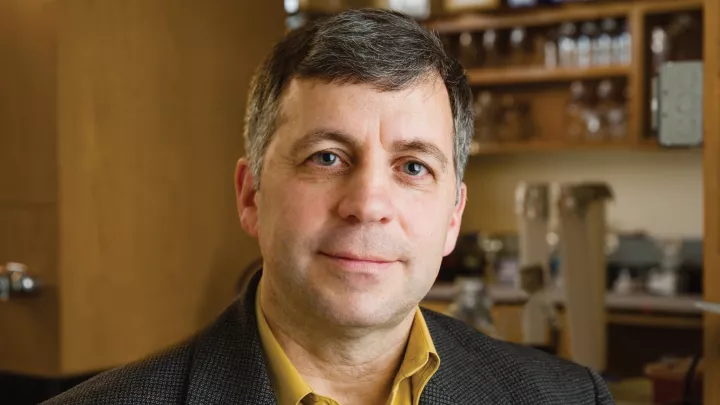
The Retinoblastoma Program has been instrumental in identifying the genetic mutation causing retinoblastoma and has recently developed a new classification system to describe the disease. Dr. Murphree has developed a technique to deliver chemotherapy into the eye without the need for injections or intravenous infusions. The hope is that this will allow better treatment for more aggressive tumors that will often go on to result in total loss of vision or the eye.
About Retinoblastoma
Retinoblastoma (RB) is a cancerous tumor of the eye. It affects the retina, the innermost layer of the eyeball, and is most commonly diagnosed in young children who are less than 5 years old. RB can occur in one or both eyes; one-third of patients have both eyes involved (bilateral retinoblastoma) and two-thirds have only one eye involved (unilateral retinoblastoma).
How did my child develop retinoblastoma?
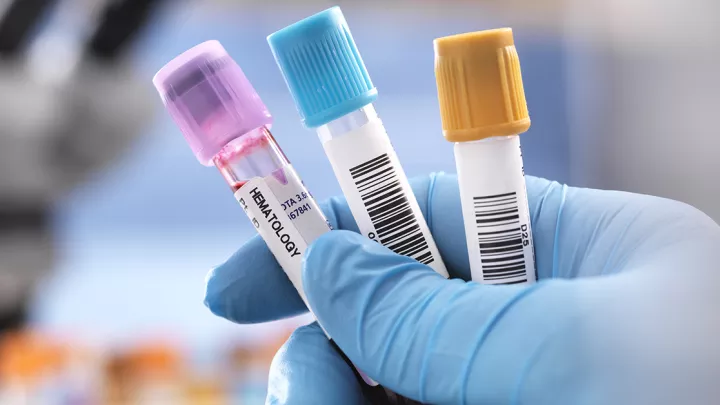
RB is caused by a mutation in the retinoblastoma gene, which is on chromosome 13. Most times this is a new mutation that occurs by chance, but sometimes this is inherited from one of the parents. The mutation can be in all cells of the body or only in the tumor cells. Genetic blood testing will be done to find out if your child carries the retinoblastoma mutation. The oncology team will discuss the results of this testing.
What are the signs of retinoblastoma?
A white glow in the pupil (leukocoria) is the most common sign of retinoblastoma. The second most common sign is when the eye appears to wander or has a cross-eyed appearance (strabismus). However, these signs will not be seen until the tumor is quite large.
What does this diagnosis mean for my child?
The survival rate for RB is almost 100% in the United States with appropriate treatment. Children with retinoblastoma have full lives after treatment, although vision can be affected. An ophthalmologist within The Vision Center at CHLA will continue to follow your child until 18 years of age. Initially examinations of the eye are done under anesthesia every month for two to three years. During these examinations, an ophthalmologist will evaluate and sometimes use treatments directed to the eye(s).
What happens after diagnosis?
When your child has retinoblastoma, the next step is to stage the cancer—identify the location and size of the tumor. An ophthalmologist will examine both eyes while your child is under anesthesia.
On the day of the staging exam, an ophthalmology nurse practitioner will place drops to dilate the eyes. Then, an anesthesiologist will take your child to the operating room, where anesthesia will be delivered so that an ophthalmologist can examine both eyes. The ophthalmologist may use an ultrasound machine to measure the tumor, take photographs of the eyes and perform a special test called fluorescein angiography.
In addition to the eye exam, a magnetic resonance imaging (MRI) scan will also be done to ensure that the cancer has not spread and there are no tumors in the brain. Because the scan requires patients to be completely still, your child will receive anesthesia to sleep during the procedure. This test must be done before RB treatment can be started.
Treatment Options
Treatment for retinoblastoma is individualized for each child based on the size, location and number of tumors. At Children’s Hospital Los Angeles, we offer a wide variety of treatment options, including:
- Chemotherapy: given intravenously or through the ophthalmic artery
- Focal therapies that are directed to the eye: cryotherapy (freezing), laser, radiation plaque (radiation directly to the eye), chemotherapy injections
- Enucleation: a surgical procedure to remove the eye
The goals of the treatment for your child will be discussed with you before any decisions are made.
How can I help my child?
Your child will continue to have follow-up visits for many years. To make your hospital visits more enjoyable, consider checking out the aquarium on the first floor near the gift shop, visiting the Joyce and Stanley Black and Family Healing and Meditation Garden, or spending time on the playground at the Jane Vruwink Palmer Healing and Play Garden.
Retinoblastoma Research
These studies, under the direction of Dr. Murphree, focus primarily on cutting-edge treatments using photochemotherapy - in which chemotherapy is administered, then activated in the tumor with light. Other investigations led to the development of a new classification system for retinoblastoma that can closely predict treatment outcomes.
Research into retinoblastoma at Children's Hospital Los Angeles has made tremendous progress in the outcomes for patients. Previously, children diagnosed with retinoblastoma typically lost at least one eye, and often lost their lives. Today, the prognosis has vastly improved and eyesight can often be saved.
Achievements in Retinoblastoma
- In 1987, identification of the gene that causes retinoblatoma (Rb).
- The invention of the RetCam more than 20 years ago. The device is now used worldwide for delicate surgery in the back of the eye.
- First in the nation to offer gene testing for all retinoblastoma patients, and the first to offer a prenatal diagnosis for the disease.
- Pioneered the concept of chemoreduction (reducing the volume of intraocular retinoblastoma with systematic chemotherapy followed by eradication with focal laser or freezing heat).
- Spearheaded the formation of a new core facility in the Saban Research Institute, which will use proteomics to search for novel serum markers that herald the onset of new cancers.
- Development of a new drug delivery system to treat chemotherapy directly to the eye.
The Retinoblastoma Program is committed to providing your child with the very best care. We understand this is a difficult time for your family and your child, and we will do everything we can to support you as you cope with this difficult time. Our psychosocial support team includes licensed clinical social workers, psychologists and child life specialists. These professionals are available to work with you on how to best support your child.